Go deeper
The lead reply and follow-ups from these lessons, as importable n8n workflows that prepare drafts for you to send.
Workflow pack
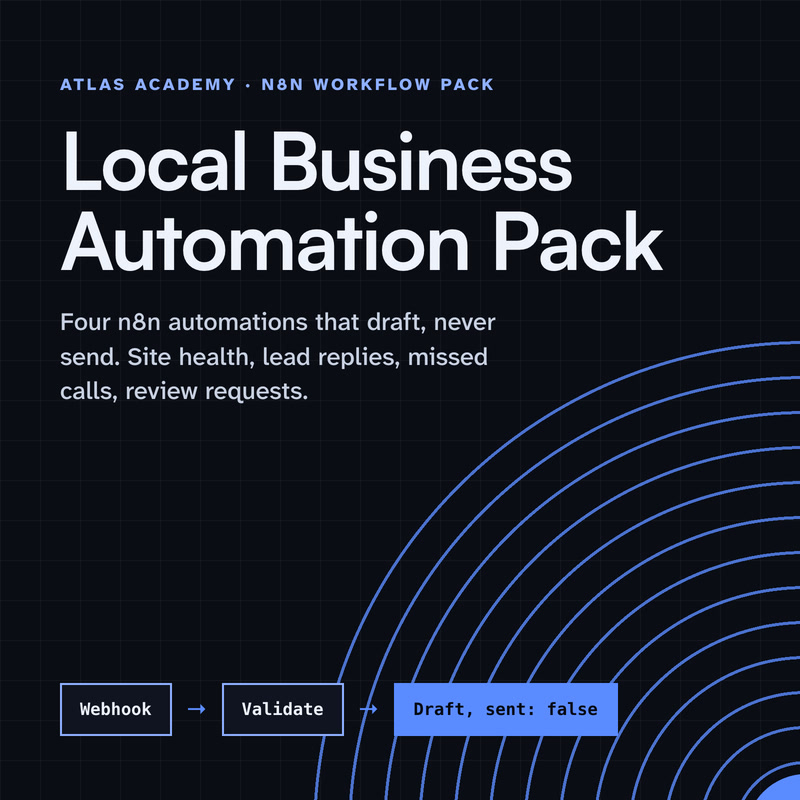
Four n8n automations for a local business that prepare drafts for you to check and send yourself: a site health check, a lead-form reply, a missed-call text-back and a review request, with a guide that explains every node.
- Level
- Some setup: Docker
- Format
- PDF, Files (zip)
- You need
- A computer that can run Docker, about an hour, no programming
Next lesson
Auto-Reply to Website Leads with n8n: Never Leave a Lead Waiting (Beginner Tutorial)
All lessons in AI Automation for Small Business
Lesson script
The lesson's script, line by line. The published video's own lines are not on record here, so the video may differ in places.
For a small business, automation means the computer does a job you keep doing by hand. A shop, a studio, a freelancer, it's the same idea.
It follows the same steps, the same way, every time. It doesn't forget on a busy Friday, and it doesn't get tired.
You set it up once, and then it just runs. The time you get back is time for customers, or for a break.
So which tasks? First, it repeats. If you do it every day or every week, it's a candidate.
Second, it follows rules. If you could write the steps on a sticky note, a computer can follow them too.
Third, it's boring. Copying details from an email into a spreadsheet is a perfect example. Nobody misses doing that, and it's exactly where small mistakes creep in when you're tired or in a hurry.
Quick quiz. Which one would you automate first: copying form details into a sheet, or deciding a refund? Comment your answer.
It's A, copying details. It's repeated and it follows the same steps.
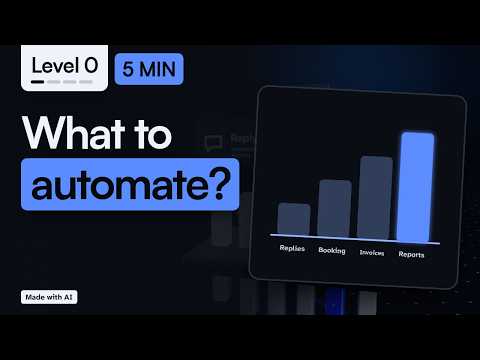
Here are five places most small businesses start. One, leads: every enquiry gets a quick, friendly first reply, even at night.
Two, bookings: a reminder goes out the day before, so fewer people forget, and you spend less time waiting for someone who isn't coming.
Three, invoices: a polite follow-up when one is still open, so you don't have to chase by hand.
Four, reports: a short weekly summary lands in your inbox or in Slack, so you see how the week went without opening five different apps.
And five, social posts: AI drafts a caption, and you approve it before anything is posted. We'll build each of these in this series.
If this is useful, subscribe. Every episode in this series builds one of these, step by step.
Now the other side: what not to automate. Anything about money, like a refund or a discount, stays with a person.
Anything that makes a promise to a customer gets a person's yes first. A fixed thank-you note is fine. A promise is not.
And anything you can't undo, like deleting records. Here's the simple rule to remember: the computer prepares, and a person decides.
Last quiz. Who should approve a refund? Comment your answer.
B, a person. Anything about money stays with a person.
How to start? Pick just one task, the most boring one on your list. You already know which one. One finished automation beats five half-built ones.
Write its steps down in plain words, in order. For example: open the email, copy the name, paste it in the sheet, send a thank-you. That list becomes your workflow later.
Then automate only the boring part, and keep the decisions for yourself. You can always add more next week.
Pause the video and try it. List three tasks you repeat every week,
then circle the most boring one. Resume when you have it.
Recap. If a task is repeated, rule-based and boring, automate it.
Leads, bookings, invoices, reports and posts are great places to start.
Money, promises and anything you can't undo stay with a person.
And start with one task. Next time: replying to every website lead fast, automatically.